

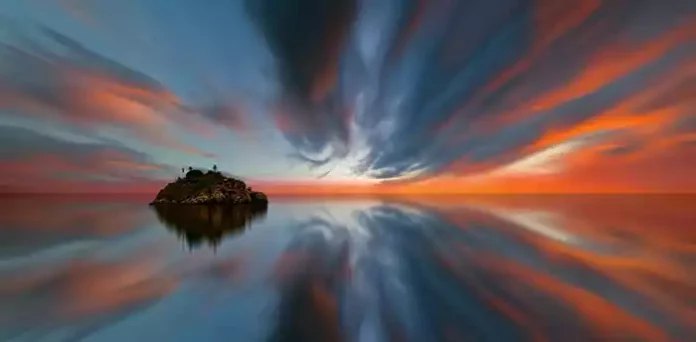
In this article, I want to explore the question: What is abstract landscape photography? Unlike traditional landscape photography, abstract landscape photography does not attempt to present reality with complete clarity. Instead, it reduces visual information through blur, unusual composition, movement, light, texture, or abstraction in order to create ambiguity, atmosphere, and personal interpretation.
Topics
Understanding Abstract Landscape Photography
Traditional landscape photography usually follows principles such as sharp focus, balanced composition, accurate exposure, and visual clarity to present detailed, recognizable scenes.
Like other forms of abstract photography, abstract landscape photography often moves away from direct realism in order to challenge the viewer’s perception and imagination.
When viewers first encounter an abstract landscape image, they may not immediately recognize the subject. Gradually, shapes, textures, light, and composition begin to suggest possible interpretations that may differ from reality.
Abstract photography often questions the viewer’s perception of reality. For this reason, abstract landscape photography sometimes intentionally abandons precision, clarity, and conventional photographic structure.
Not all abstract landscape photographs are heavily blurred. In many cases, the image remains technically sharp while unusual composition, framing, texture, or perspective makes the subject difficult to recognize immediately.
By reducing recognizable scenes to texture, contrast, shape, and tonal relationships, photography gradually enters the realm of fine art abstract photography.
Breaking Traditional Landscape Photography Rules
Intentional Camera Movement and Motion Blur
In traditional landscape photography, photographers are usually taught to keep the camera stable in order to avoid blur and maintain maximum sharpness throughout the image.
As landscape scenes become wider and visually more complex, composition depends heavily on balance, depth, spatial relationships, and visual harmony — all important elements in fine art landscape photography.
Abstract landscape photography often intentionally breaks these rules by introducing motion blur, distortion, or camera movement in order to create uncertainty and visual ambiguity.
The amount of blur used in abstract landscape photography depends entirely on the photographer’s artistic intention, the subject, and the atmosphere they want to create.

Impressionistic Landscape Photography
In impressionistic landscape photography, photographers often move the camera vertically, horizontally, or diagonally during longer exposures to create soft, painterly, and abstract visual effects.
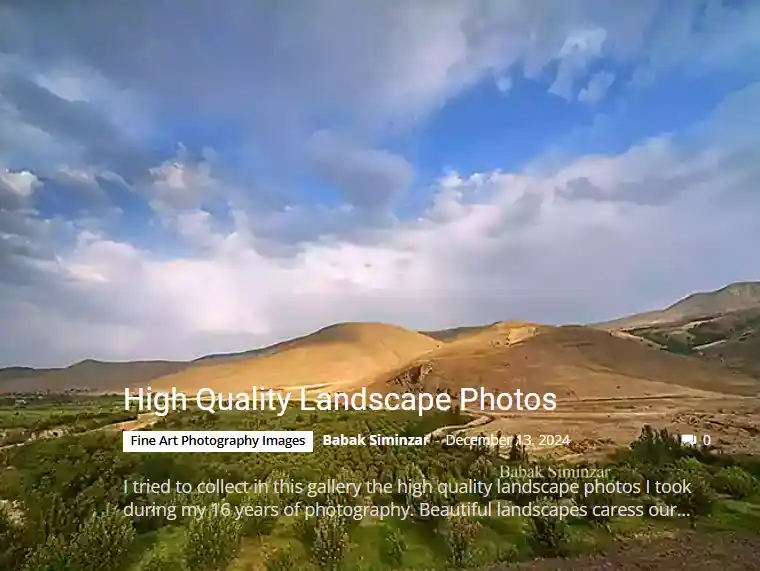
Please take a look at the Fine Art Landscape Photos Gallery to see more images
Representational landscape photography differs from abstract and impressionistic photography because it attempts to present the scene as clearly and realistically as possible.
Removing the Horizon Line
The horizon line is normally one of the main structural elements in landscape photography, but abstract landscape photographers often remove or hide it to reduce spatial orientation and realism.

Extreme Exposure in Abstract Photography
Traditional landscape photography usually aims for balanced exposure based on natural lighting conditions, while abstract photography may intentionally use overexposure or underexposure to reduce realism and visual clarity.
Extreme brightness or darkness can simplify visual information and help create more atmospheric and ambiguous abstract images.

Abstract seascape photography
The seaside is an excellent opportunity for abstract photography of the landscape. The seascape in different situations is a perfect subject for abstracts.

Changing typical to abnormal composition
You can create an abstract from the landscape with an unusual composition without blurring. It is enough to take the camera toward the trees or bushes that it is difficult for the audience to determine the correct position.


Please take a look at the Abstract Pictures of Nature Gallery to see more images
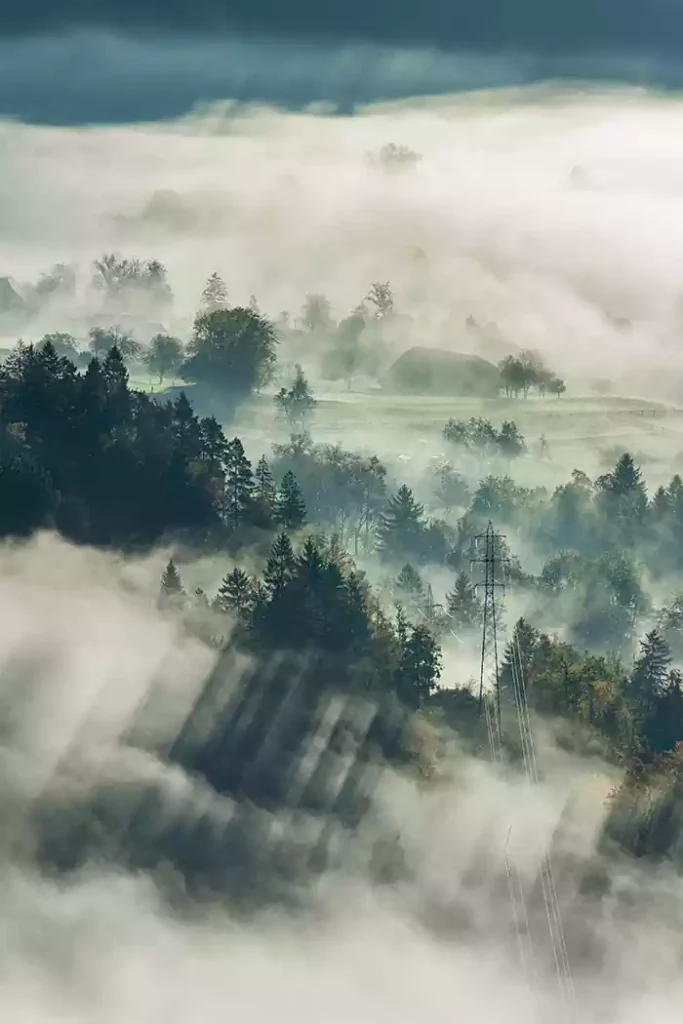
Using reflections in landscape images to create abstracts
The reflection can create a beautiful abstract landscape if it covers a large part of the image. Reflections may exist in the scene or be created by software during editing.
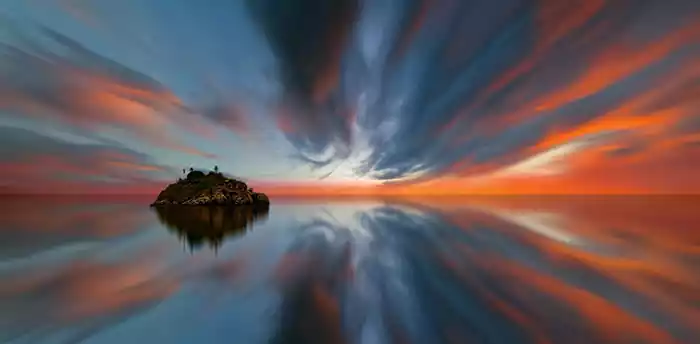
Aerial landscape photography
This style refers to high-altitude photography. The images obtained by this method from the coasts, mountains, and rivers can be considered abstract.
Photographers use drones or airplanes to take these photos. If you are climbing a high mountain by the sea, you will have an excellent opportunity to photograph the small islands near the coast in this style.


Conclusion
For abstract landscape photography, instead of following the standard principles of photography, you must create images by violating them so that the audience cannot find out the concept of the photo in the first place.
Sources

Download this tutorial PDF for free: What is landscape abstract photography? PDF
