

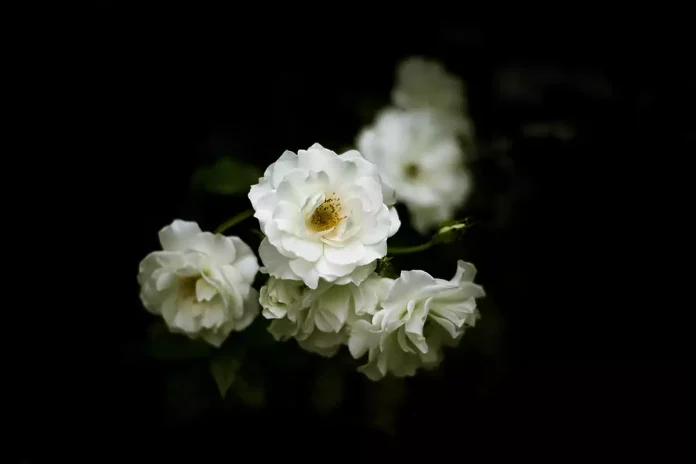
Fine art flower photography is one of my favorite subjects. The majority of my macro and close-up photography falls into this style. Flowers are beautiful, and taking gorgeous photos of them multiplies this beauty and makes it dreamlike. In this article, I have introduced techniques to achieve this goal.
Topics
Creative fine art flower photography ideas
It’s best to have a general idea of what you want. This will be beneficial because you can visualize the path in your mind. But things do not always go smoothly!
What better way to start? Looking for beautiful flowers? Of course, it is a good idea for flower photography, but it only tells part of the truth.
Beautiful flowers naturally attract people’s attention but are not very abundant. Sometimes, you take a picture of a not-so-beautiful plant that is not even a flower.
To view more images, please look at the Fine Art Flower images
You will come up with an idea for that image later. As you move forward, you will find out that specific points about the plant can be helpful.
This design and the idea on which the whole image is based on determining what kind of plant is suitable for photography.
The theme you are using may be Black and White or Threshold. You may use various colors or work with only 2 or 3 color spectrums. Are the details supposed to be sharp in the depth of the field? Or is the background blurry?
The above situations can be exciting, but each requires a different subject.
When an image is shaped by intention rather than subject alone, it enters the domain of fine art photography.
Click on the link below to read more articles about fine art photography:

How can you turn an image of flowers into a fine art flower photo?
In fine art flower photography, no matter which way you go, it is essential to escape reality. Man instinctively likes to take refuge in fantasy.
You can change the background and create the contrast of shadow and light in different forms in the background. Some even change the color of petals with the help of Photoshop to achieve the harmony they have in mind.
I’m not very interested in changing the petals’ color; I use their true color. However, I have noticed that sometimes, due to incorrect adjustments in the amount of exposure during shooting, the petals have an abnormal tint, which is more attractive than their actual color.
Sometimes, no color change is required in photo components; everything can be realistic.
In artistic flower photos, the angle of the petals and how flowers are placed in the image environment transform the image into a beautiful artistic idea.
Creative Techniques
Those who do this, in principle, usually have a studio with good and multiple light sources. They may use a standard 70-200 lens and will probably benefit from the f / 16 aperture and ISO 200 with this equipment. So they will definitely use a tripod because the exposure time will be long.
If these people are also in good taste, the result will be great with these tools.
But I acted differently. I never had a studio! I mostly photographed in natural light, and sometimes I had to use the flash.
Because I was interested in fine art macro flower photography, I used a 35mm Zuiko macro lens and an Extension Tube. I also used the standard Zuiko 14-42 lens for close-up photography.
I have always favored using a wide aperture of f / 2.8 to f / 5.6 because I like the blurred background. In addition to being beautiful and creating a dreamy image, the blurred background makes the viewer focus on the main subject.
In addition, a wide aperture solves the exposure problem in semi-dark weather because nature does not coordinate with us regarding cloudy and sunny weather!
Once you have chosen your editing strategy, you have several techniques at hand.
The color of the petals can be used for the background. Or vice versa, you can use an opposite color to create a contrast and attract more attention.
You can delete the entire original background and create your imaginary one. Or you can blur it and put a layer of color between the background and the flower components. Then, you need to reduce the opacity of the color layer; the latter method is widespread.
The angle at which you photograph the plant is essential; transversal tips are usually better than shooting from the front.
The more you explore nature, the more subjects you will find for photographing flowers
Going to nature to search for a subject for photography is laborious and time-consuming. But sometimes flowers can be found along the road, on hills, at the bottom of valleys, or along rivers, which can be great subjects for fine art flower photography.
Conclusion
These images are more than just simple macro or close up photos. They have a particular point, which can be called a kind of look.
Editing is sometimes widespread, so you need to be familiar with Photoshop or any other program you prefer.
