


Settings in macro photography are simple and are based on simple principles, such as depth of field. The photographer’s taste, experience, and art determine the rest of the work. For example, I am a fan of using a wide aperture and a blurred background, and I mostly use manual adjustment, but another photographer’s taste may differ. In this article, I will share my experience with camera settings for macro flower photography.
Topics
- What is the best aperture for macro flower photography?
- What is the best shutter speed for macro flowers photography?
- Which mode should we use in the camera?
- Using flash
- “Focus” in the macro flower photography setting
- What is a suitable focal length range for a macro lens for flower photography?
- ISo issue in camera setting for macro flower photography
- The difference with the Camera setting for close-up photography
- Sources:
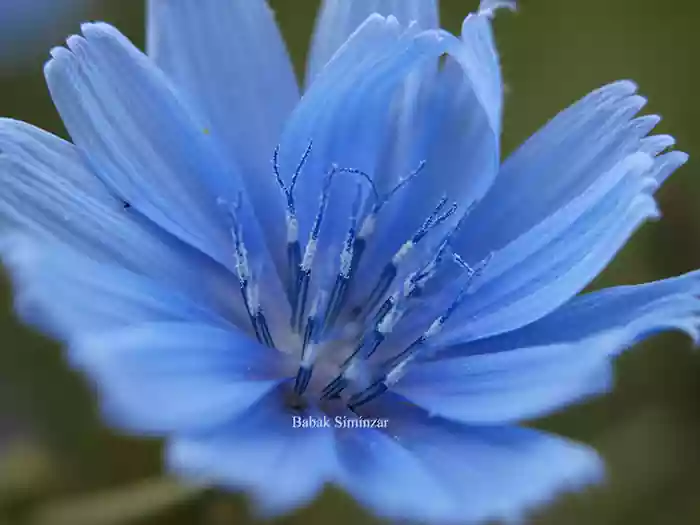
What is the best aperture for macro flower photography?
There is no specific rule; it all depends on your taste. In camera settings for macro flower photography, apertures of f/11 to f/22 work best for capturing details in flowers and the background, but they will put you at a disadvantage when there is not enough light. If the environment has enough light, there will be no problem, and you will have a background with precise details.
But if there is not enough light in the environment, you will have to lower the shutter speed in the camera setting in macro flower photography. One disadvantage of low shutter speed is the possibility of camera shake and blurring of the image, so you will have to use a tripod.
Focusing on small details and textures is essential in macro flower photography, where even a single petal can define the entire composition.
If you use apertures from f/2 to f/5.6, you will lose background detail, making it blurry. But in return, you will have the advantage of shooting in low light and any conditions. It looks like it’s worth it in flower photography ideas!
Please take a look at Macro Flower Images to see more macro flower images
These apertures allow for high shutter speeds, and a tripod is unnecessary except in meager light. Thus, they enable macro photography of flowers in nature with only one camera.

What is the best shutter speed for macro flowers photography?
The best shutter speed is 1/125 and faster speeds for macro flower photography in the camera setting. At these speeds, the possibility of blurring due to vibration is reduced. But in low light, you have to work at lower rates; if you can hold the camera firmly, you can get good results with a speed of 1/60. Working at a speed of 1/30 is complex and not consistently successful, and speeds lower than without using a tripod are unsuccessful.
Working at close distances changes the way we perceive form and detail, often leading toward fine art macro photography, where small elements define the entire composition.
Which mode should we use in the camera?
I use the camera’s manual mode, which has several advantages. I can freely change the settings in different situations, gaining experience and discovering new settings.
If you are in a hurry, you can use the camera’s macro photography mode to save time manually adjusting it.

Using flash
I do not recommend using the flash in manual camera mode as it may produce unexpected results. Putting the camera in macro mode is better if you want to use flash due to low light.
“Focus” in the macro flower photography setting
It is better to use automatic focus in the camera settings for sharp, precise macro flower photos. But if you use an Extension Tube and a standard lens instead of a macro lens, you may have to use manual focus because the Extension Tube can cause automatic focus problems with some lenses.
This problem happened to me with the Olympus camera, but the situation may be different with Canon and Nikon cameras.
What is a suitable focal length range for a macro lens for flower photography?
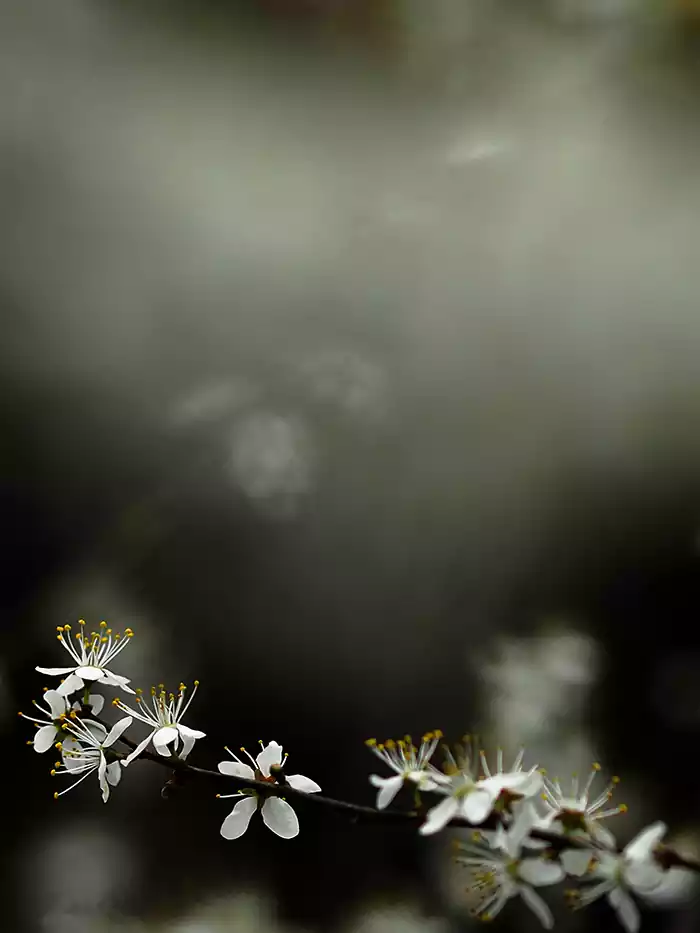
It does not matter! You will be forced to get closer to the flower with a short focal length, but the result will be the same in both cases. I took all my macro shots with a 35mm lens.
ISo issue in camera setting for macro flower photography
ISO can resolve low-light problems. But don’t use ISO above 800 in macro flower photography; higher values often lead to color noise.
The difference with the Camera setting for close-up photography
I must say that there is no significant difference between the settings of close-up and macro flower photography. The only difference is that a longer focal length is used in close-up photography.
